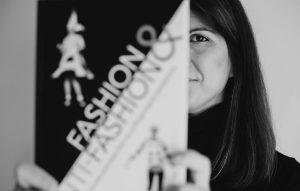
In March 2021, my fascination with fashion magazines sparked the inception of this project. Specifically, the magazine ‘Fashion & Embroidery—Female Life’ (Modas & Bordados in Portuguese), circulated between 1912 and 1977, served as a crucial guide for middle—and upper-class Portuguese women. This magazine, which became the cornerstone of my inspiration, dictated not just fashion trends but also societal norms, domestic responsibilities, and even culinary practices for women, almost similar to some scenes if you watch the ‘Mad Men’ series.

Considering the current Portuguese political and social context, it took me to revive this project, which I have wanted to recover for some time now. In Portugal, this year, we are celebrating 50 years after the end of a dictatorship, which happened with the Carnation Revolution on April 25th of 1974 as the code word was the song “E Depois do Adeus” sung by Paulo de Carvalho on 24th night on the radio. Bitterly, with this year’s celebration, nowadays we have the rise of the political far-right, in which, for the new government, we have fifty people of the far-right in the Portuguese assembly.
However, during the dictatorship in Portugal, a women’s fashion magazine ‘Fashion & Embroidery – Female Life’, was reviewed by the censorship commission (known in Portugal as ‘the blue pencil’), which, when I actually saw it, shocked me a little. During the 48 years of dictatorship in Portugal, 36 years of which Salazar had absolute power. During the inauguration of the National Information Secretariat, he said: ‘Politically, only exists what the public knows exists’.
Under the oppressive regime, the blue pencil became the symbol of repressed expression. It was the tool of choice for the dictatorship to control and restrict freedom of expression. Everything was exposed to censorship, from books and newspapers to films and records, leaving a profound impact on the cultural and intellectual landscape of the time.

This context made me think about freedom, not just in what we wear but also in what we say, write, and write about what we wear and what surrounds us. Above all, it made me think about the impossibility of not doing so today. This made me question: Is the need for people to dress how they really want, rather than how society tells us to dress, the ultimatum of freedom?
Well, in many situations, the freedom to wear what we genuinely want is still not compatible with the several social contexts in which we find ourselves in our everyday lives. Then there’s another thought: we often dress according to how we want the people around us to see us, not exactly how we see ourselves as we really are. Allied to the idea of freedom in how we dress comes the concept of authenticity and individuality.
The necessity to be authentic stems from the need for everyone to cultivate their own uniqueness and individuality, which has led to a tendency to give clothes a marker of authenticity. Lipovetsky, in ‘Le sacre de l’authenticité’ mentions the existence of anonymity of industrialised fashion in a culture of ‘be yourself / do it yourself’ against the dictatorship of an ideal of beauty of the thin and young, denying the uniqueness of each woman.
In my experience, not only in the classroom but also in several other public spaces, we experience plurality in fashion; being in the same physical space with a diversity of people who dress differently from each other, we experience a more democratic fashion. Plurality in fashion is about more than just diversity in clothing styles; it’s about the freedom for individuals to express their unique identities and challenge societal norms through their clothing choices. This concept of plurality in fashion is a powerful tool for promoting democracy and fostering a more inclusive and diverse society. Themes such as authenticity, plurality, and democracy related to clothing and fashion are ideas that will be addressed here in the near future.

Let’s always celebrate freedom with what we wear today and always.